If you’ve been told you have PCOS and then handed a pamphlet that vaguely recommends “losing weight and exercising more,” you are not alone. Polycystic ovary syndrome is one of the most common endocrine conditions in women — and one of the most poorly managed in conventional medicine.
The good news: nutrition has meaningful, measurable effects on PCOS. The better news: the changes that work are not a rigid forever-diet. They’re a set of principles you can adapt to the rest of your life.
This is a starter guide, not a treatment plan. If you have PCOS, individualized care from a dietitian and physician will always outperform a generic article. But here’s the foundation the good individualized plans tend to share.
Understanding PCOS in one paragraph
PCOS is a hormonal and metabolic condition affecting roughly 10 to 15 percent of women of reproductive age. It’s characterized by some combination of irregular or absent periods, elevated androgens (which can cause acne, hair thinning on the head, excess hair growth elsewhere), and polycystic-appearing ovaries on ultrasound. The underlying driver in the majority of cases — though not all — is insulin resistance: the body’s cells have stopped responding well to insulin, which sets off a cascade affecting reproductive hormones, mood, energy, and weight. Understanding that one mechanism explains most of what dietary changes are trying to fix.
Why insulin resistance is the core of the puzzle
In a body without insulin resistance, eating a meal raises blood sugar a little; the pancreas releases insulin; the cells accept glucose; blood sugar comes back down. Everything stays in range.
In insulin resistance, the cells have stopped responding efficiently. The pancreas has to release more insulin to do the same job. Elevated insulin levels then trigger the ovaries to produce more testosterone, disrupt ovulation, and promote fat storage in particular areas. This is why women with PCOS often describe the same pattern: energy crashes, cravings, mood swings, stubborn weight, irregular cycles, and the feeling that their body is working against them. It is, in a sense — but the mechanism is treatable.
Almost every evidence-based dietary intervention for PCOS is ultimately aimed at one thing: reducing the insulin response to meals. Once you understand that, you can evaluate any “PCOS diet” advice by asking whether it actually does that or just sounds like it does.
The foods most research supports
A few patterns show up again and again in the PCOS literature:
Protein at every meal, and first. Protein has the smallest insulin response of the three macronutrients and keeps you full for hours. Aiming for 25–35 grams at each main meal, and leading the meal with the protein on your plate, blunts the blood sugar rise of anything else you eat alongside it.
Fiber, in every category of the plate. Vegetables, legumes, whole grains, intact fruit. Fiber slows glucose absorption dramatically — an apple with its fiber raises blood sugar far less than apple juice with none. PCOS improves reliably as daily fiber climbs toward the 25–35 gram target most women currently fall short of.
Anti-inflammatory fats. Olive oil, fatty fish, avocado, nuts, and seeds carry omega-3 and monounsaturated fats that reduce the low-grade inflammation characteristic of PCOS. A Mediterranean-style pattern of eating has more high-quality evidence for PCOS than any other named diet.
Carbohydrates that still have their fiber. Not low-carb — smart-carb. Cutting carbs dramatically often worsens mood, cycle regularity, and sleep for women with PCOS, even if weight comes down in the short term. Whole grains, beans, lentils, sweet potatoes, squash, oats, and whole fruit are the friends. Refined flours, sugary drinks, and white-flour baked goods are the foods that reliably spike insulin in anyone, and especially in PCOS bodies.
Cruciferous vegetables, specifically. Broccoli, cauliflower, Brussels sprouts, cabbage, and kale contain compounds that support the liver’s estrogen metabolism pathway — useful when hormones are already off.
The broader framework for putting these together is here: How to Build a Balanced Plate.
What a sample day can look like
A realistic, unglamorous example:
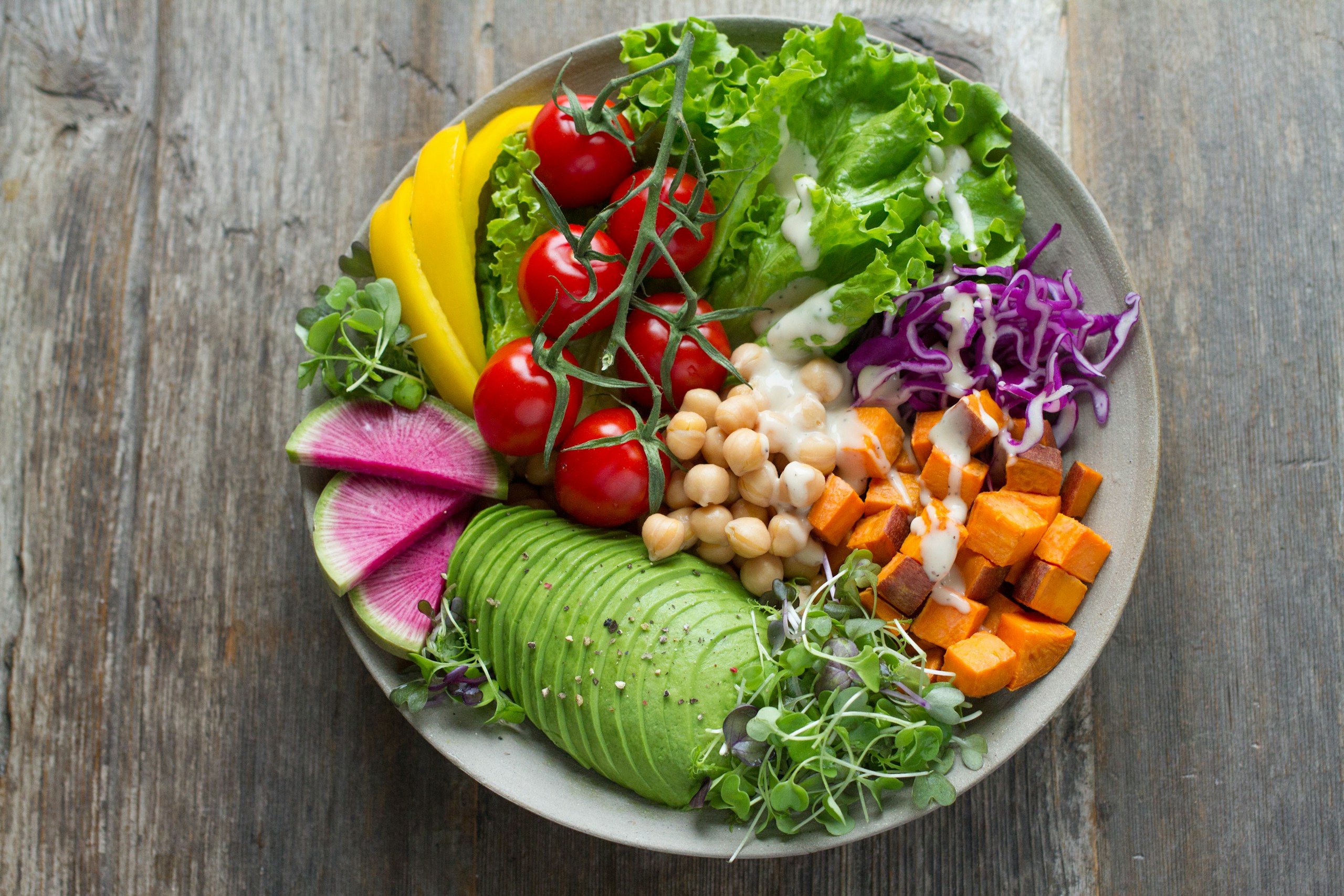
- Breakfast: Three eggs scrambled with spinach, half an avocado, a slice of whole-grain sourdough, a few berries
- Lunch: Big salad with grilled chicken, chickpeas, roasted vegetables, olive oil dressing, a small piece of crusty bread
- Snack (if hungry): Greek yogurt with walnuts and a drizzle of honey
- Dinner: Salmon, roasted Brussels sprouts, quinoa with olive oil and lemon, a side of sautéed greens
Nothing exotic. No off-limits food groups. Every meal has substantial protein, fiber in multiple forms, healthy fat, and smart carbs. If most of your days look roughly like this — not perfectly, just roughly — you’re doing the real work.
Supplements commonly discussed — what the evidence shows
Inositol (specifically a 40:1 ratio of myo-inositol to d-chiro-inositol) has the strongest evidence of any supplement for PCOS. Multiple randomized trials show meaningful improvements in insulin sensitivity, ovulation, and androgen levels. It is reasonable to discuss with your doctor.
Vitamin D deficiency is common in PCOS and correcting it — when a deficiency is confirmed by blood test, not guessed — improves several markers. Ask for a 25-hydroxyvitamin D test before supplementing.
Omega-3s, if you’re not eating fatty fish regularly, have modest anti-inflammatory benefits in PCOS.
NAC, berberine, cinnamon, chromium — these rotate through the PCOS supplement marketing cycle. Some have early evidence, none have the volume of data inositol does. Discuss with a clinician before spending money on a stack.
Supplements cannot replace the dietary pattern. They work as a multiplier on top of the food foundation, not as a substitute for it.
Building a sustainable, shame-free approach
A pattern I see repeatedly: women diagnosed with PCOS respond by trying to eat perfectly. They cut out entire food groups, count every carb, punish themselves for any deviation, and within six months have developed a second, parallel problem — a damaged relationship with food on top of the PCOS itself.
PCOS is a lifelong condition. Any approach that isn’t sustainable for the next twenty years isn’t actually working, even if the short-term lab numbers improve. The pattern that tends to hold up over years includes:
- Consistent eating — breakfast, lunch, dinner, snacks if needed — rather than chronic undereating that triggers insulin chaos later
- Room for flexibility — the birthday cake, the restaurant meal, the occasional pasta night — without a spiral
- Movement that genuinely fits your life (strength training has particularly good PCOS evidence)
- Adequate sleep, which influences insulin sensitivity more than most people realize
- Stress management as a non-negotiable, not a nice-to-have
PCOS is best managed by adding structure, not subtracting joy. Every dietary change is more effective when it can sustain itself without white-knuckling.
PCOS is one of our most-worked specialties
A consultation can translate the principles here into the specific plan for your labs, your cycle, and your life. See consultation options →
The content of this article is for educational purposes only and is not a substitute for individualized medical or nutritional advice. PCOS is a medical condition that benefits from coordinated care between a physician and a qualified dietitian. Always consult a qualified healthcare provider for guidance specific to your situation.
Leave a Reply